
During WWII, with the national focus on the war effort, a federal wage freeze was implemented. This freeze led to what we now know as the employer-sponsored health insurance (ESI) model in the United States.
How did we get there?
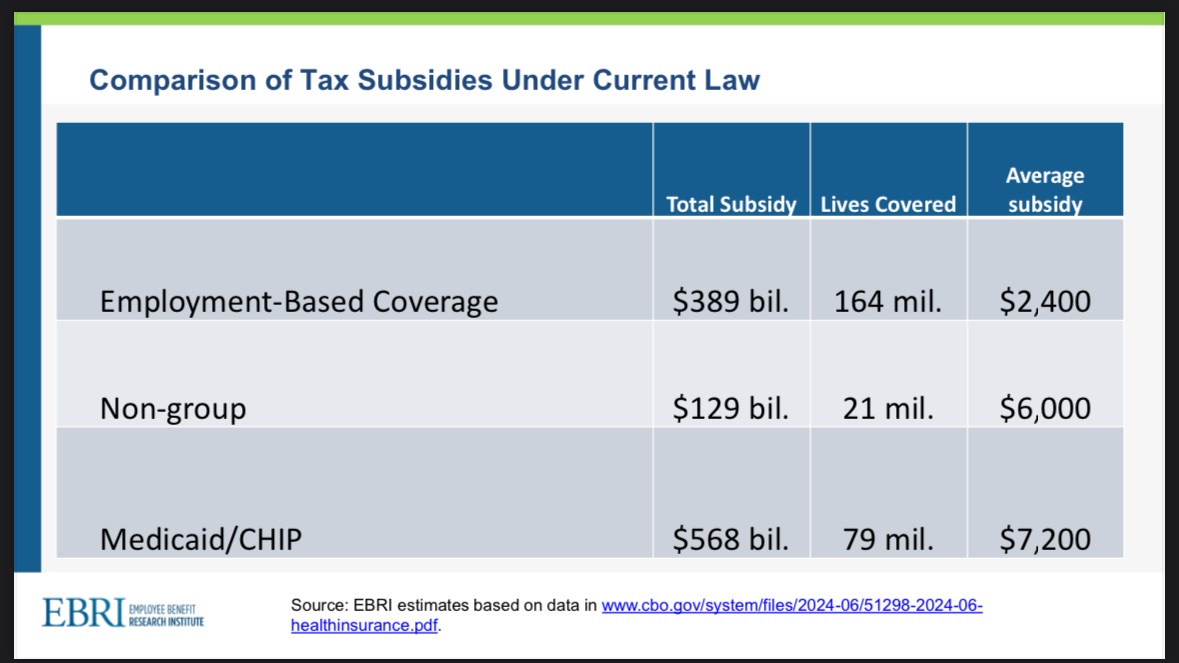
While wages were frozen, the IRS allowed employers to offer certain benefits, including health insurance, which were excluded from taxable wages. That decision laid the foundation for today’s system, where 164 million Americans receive health coverage through their employer.
Every few years, someone in Washington proposes eliminating or capping the Employer Tax Exclusion. Why? Because Congress scores the tax-free treatment of employer-sponsored coverage as a “cost” in federal budget calculations.
Why is this a bad idea?
The Employer Tax Exclusion isn’t just a historical quirk — it’s a very efficient subsidy for health coverage. Consider this:
• ESI costs about one-third less than non-group (individual market) coverage and Medicaid.
• Employers leverage large risk pools and administrative efficiencies to make health coverage affordable and sustainable for employees.
Removing or limiting the exclusion would disrupt one of the most stable parts of our healthcare system and make coverage more expensive for workers and employers alike.
This isn’t just a tax issue — it’s about maintaining access to affordable, high-quality health coverage for millions of families.
