
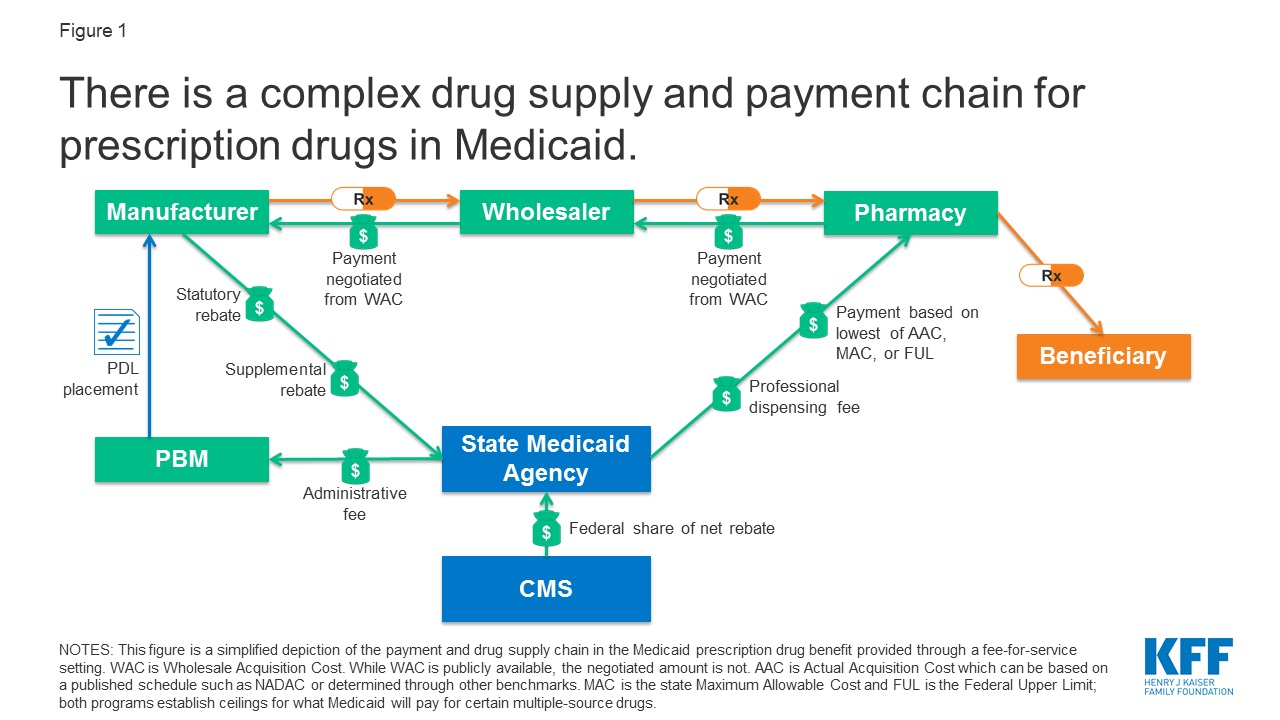
The U.S. Department of Health and Human Services (HHS) Assistant Secretary for Planning and Evaluation – HHS released a report last month analyzing two years of RxDC reporting. Here’s what they found:
Key takeaways:
- 46% of tracked drugs had list price increases higher than inflation.
- In 2022, the U.S. spent $406 billion on retail prescription drugs, up from $291 billion in 2014. Per capita spending hit $1,227 in 2022.
- Rebates accounted for 20-22% of gross drug spending in employer-sponsored and individual market plans.
In comparison:
↳ Medicare Part D: 31%
↳ Medicaid: 53% - Rising prescription costs often result in formulary changes or tighter utilization management—rather than premium increases—as insurers work to keep premiums attractive.
And yet, the system remains murky.
The HHS report itself notes that the rebate flows image is “illustrative only.”
Why?
Because no one really knows how it all works.
The takeaway? Understanding drug pricing in the U.S. means untangling a web of prices, rebates, and costs—one that keeps growing.
Source: U.S. Department of Health and Human Services, “Prescription Drug Spending, Pricing Trends, and Premiums in Private Health Insurance Plans,” November 2024.
Read the full report here: https://lnkd.in/exD9tqV2
What are your thoughts on how rebates affect affordability?
